- Have any questions?
- +92 051 2717932
- info@geese.org.pk

Projects in : Community Physical Infrastructure CPI
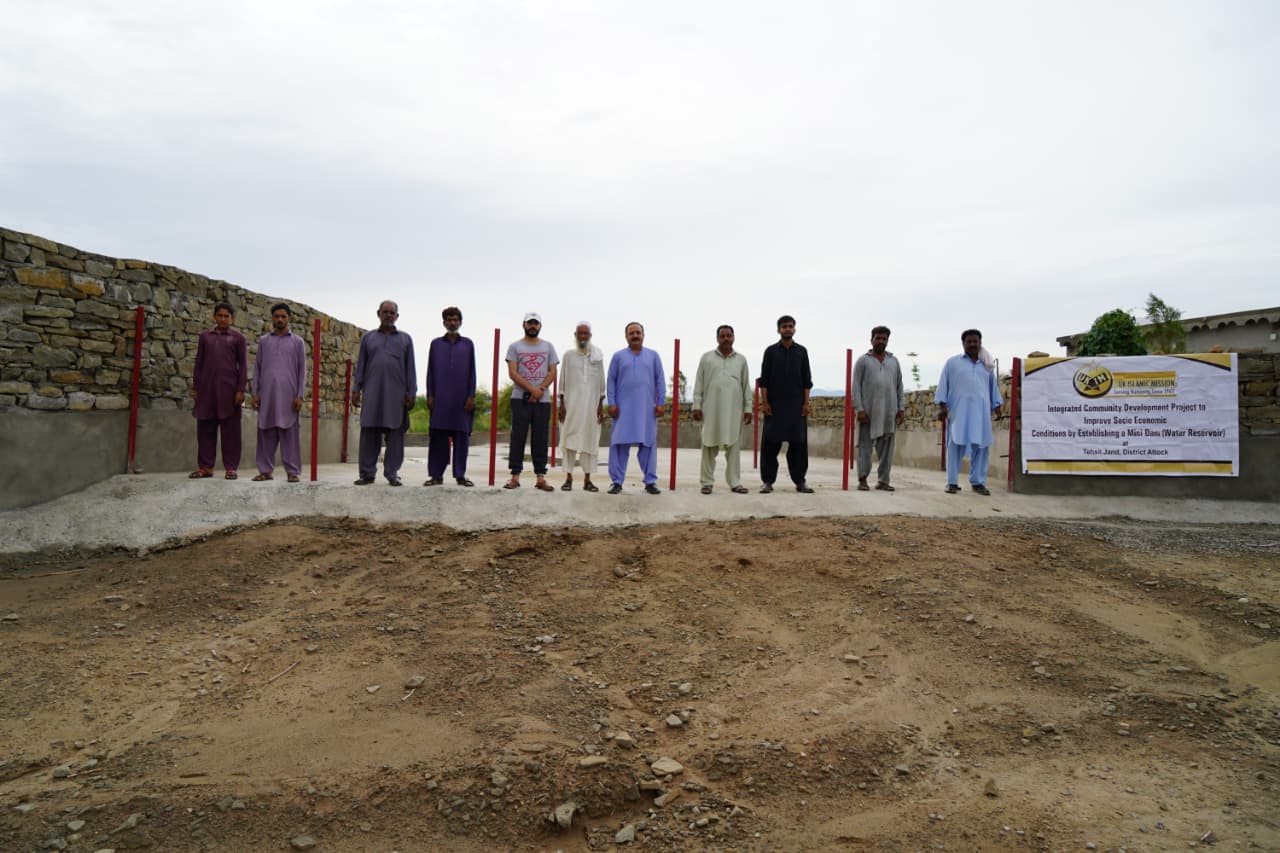
Integrated Community Development Project to Improve Socio-Economic Conditions by Establishing a Mini Dam (Water Reservoir).
Project Introduction: Funded by UKIM and implemented by GEESE, this project was implemented in Village Jalwal, Tehsil Jand, District Attock, Punjab, Pakistan. The project aimed to address the critical issue of water scarcity and its detrimental impact on the local community’s livelihood by constructing a mini dam to harness rainwater, recharge groundwater, and provide a sustainable water source for agriculture, livestock, and domestic use. The project was designed to improve the socio-economic conditions of the community through increased agricultural productivity, enhanced food security, and the creation of livelihood opportunities. The construction of the mini dam was completed within a period of 9 months, from March 2024 to December 2024. The project has yielded significant achievements, including the successful construction of the dam with a capacity of 600+ acre-feet, creation of employment opportunities during the construction phase, and setting the stage for improved water availability and livelihood opportunities for the local community. Activities: • Conducted feasibility studies to identify the suitable location for the mini dam. • Acquired the necessary land for dam construction. • Designed and constructed the mini dam, including: - Retaining wall - Spillways to regulate water flow and prevent erosion - Necessary infrastructure • Cleared debris and ensured the dam’s structural integrity. • Prepared the dam for the upcoming monsoon season to capture and store rainwater.
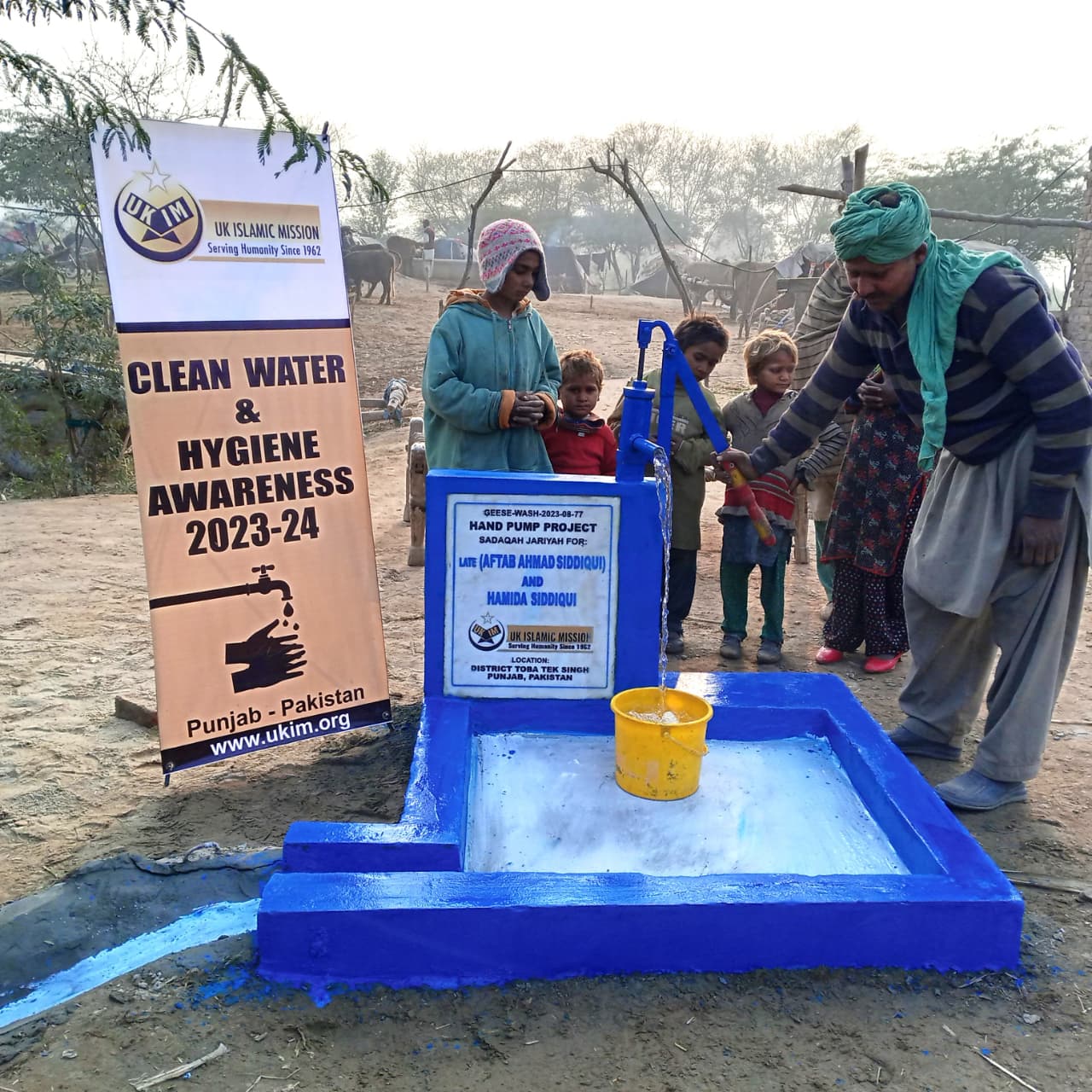
Provision of Clean Water through Installation of 100 hand pumps in District Toba Tek Singh
One hundred hand pumps were installed in District Toba Tek Singh, central Punjab, specifically in Union Council 26 (ج-ب) and villages 397 and 398. Toba Tek Singh was formerly part of Faisalabad, becoming a separate district in 1982. The project aimed to: assess the drinking water needs of vulnerable communities in the targeted villages; identify 100 beneficiary households; and construct 100 hand pumps at their homes. Villagers in Chak #397 and 398 previously walked long distances daily to collect water for themselves and their livestock. The hand pumps address this need by providing access to fresh water, assessed through needs assessment, beneficiary identification and installation of hand pumps. The project outcomes were the assessment of immediate drinking water needs, identification of 100 beneficiaries for hand pump installation, and provision of clean drinking water to those families. To promote environmental sustainability, the beneficiaries were encouraged to plant 3-5 trees per hand pump, with plans to implement this during the next spring planting season. Hand pumps were installed in suitable locations and in an organized manner to minimize environmental disturbance.